Superhuman
A case study in designing an AI marketplace that helps users find, trust, and adopt AI agents.
Challenge: Design an AI Agent Store that enables users to easily discover, understand, and launch AI agents for their everyday work.
Impact: By organizing AI agents around user needs instead of technical capabilities, the Agent Store increased discoverability, reduced decision fatigue, and created the foundation for a scalable ecosystem of first-party and third-party AI agents.
🌑 Background
As AI capabilities rapidly expanded within Superhuman, users needed a simple way to discover and use an increasing number of AI agents. Rather than exposing a growing list of tools, the challenge was to design a marketplace that felt approachable, trustworthy, and intuitive—helping users understand not only what each agent does, but when and why they should use it.
The Agent Store became the central hub for AI discovery, supporting both Superhuman-built experiences and future third-party integrations while remaining consistent with Superhuman's clean, productivity-first design language.
🌕 Objectives
Create a centralized marketplace for AI agents
Help users discover relevant agents with minimal effort
Organize agents around real-world tasks instead of AI technology
Build trust through clear descriptions and recognizable creators
Support first-party and third-party agent ecosystems
Create a scalable framework for future marketplace growth
🌗 Research and Analysis
Primary Users
Knowledge workers, professionals, and students who rely on AI to streamline daily tasks.
User Characteristics
Frequently switch between writing, research, and communication tasks
Interested in AI but unsure which tools best fit their needs
Value speed, clarity, and minimal cognitive overhead
Expect personalized, high-quality recommendations
User Behavior Analysis
Research uncovered several behavioral patterns:
Users often knew the problem they wanted to solve, but not which AI agent could help
Trust and familiarity strongly influenced whether an agent was tried
Browsing by task felt more natural than browsing by technical capability
Too many options without guidance increased abandonment
Marketplace Analysis
Competitive research focused on:
AI discovery experiences
Productivity marketplaces
Plugin ecosystems
App store navigation patterns
Information hierarchy
Trust-building mechanisms
🌘 Key Findings
Research revealed several key insights:
Users think in tasks, not AI models
Featured content encourages exploration
Categories reduce cognitive load
Trust signals increase adoption
Visual hierarchy improves discoverability
Scalable navigation is essential as the ecosystem grows
🌑 Design Process
Phase 1: Information Architecture
Defined marketplace taxonomy
Created category structure
Organized agents by user goals
Designed scalable navigation
Phase 2: Experience Design
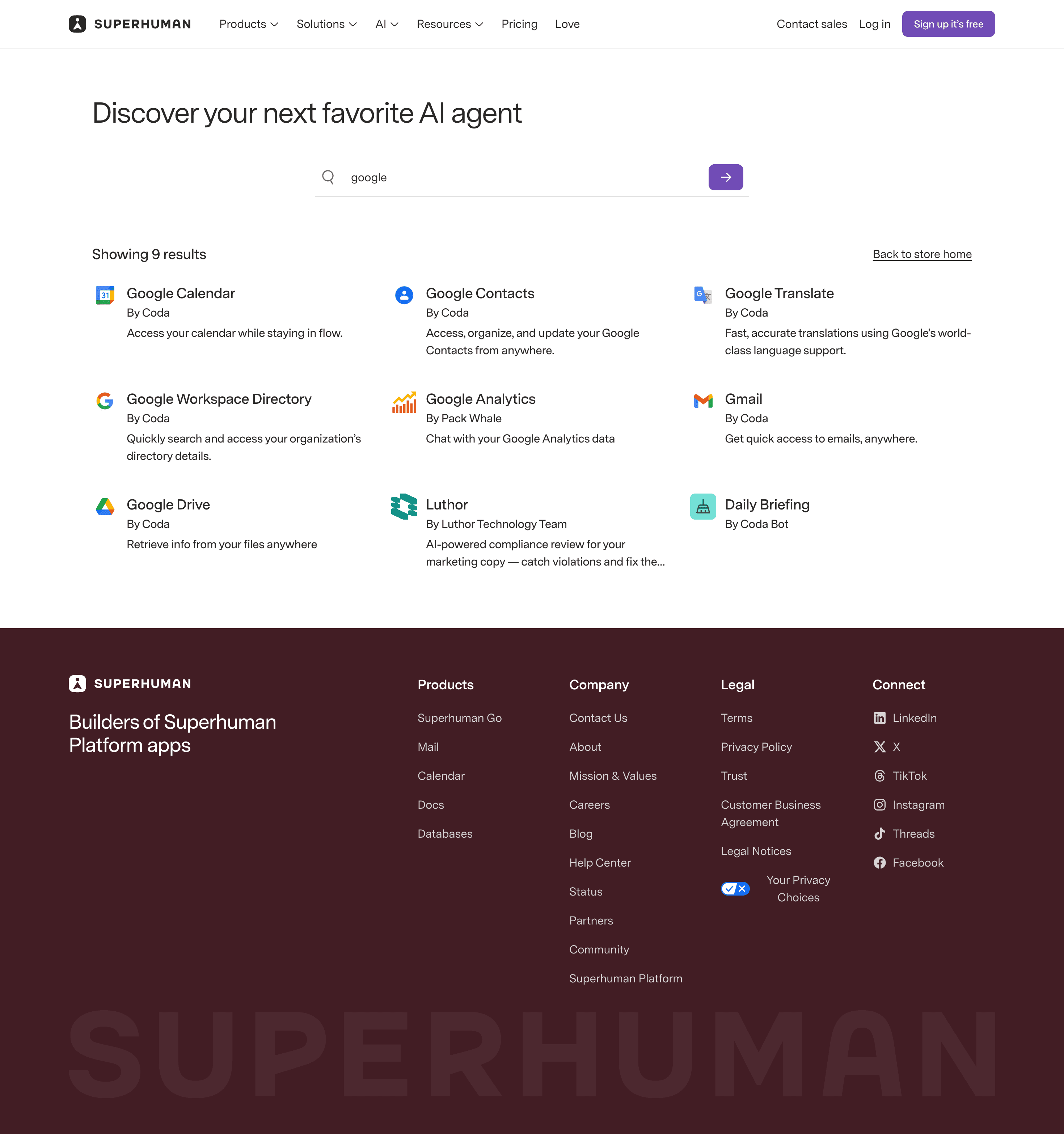
Designed browsing and discovery flows
Created featured agent experiences
Built reusable marketplace components
Established interaction patterns
Phase 3: Marketplace System
Developed modular card system
Created category templates
Designed integration patterns
Built scalable layouts for future expansion
🌒 Key Design Solutions
1. Featured Agent Experiences
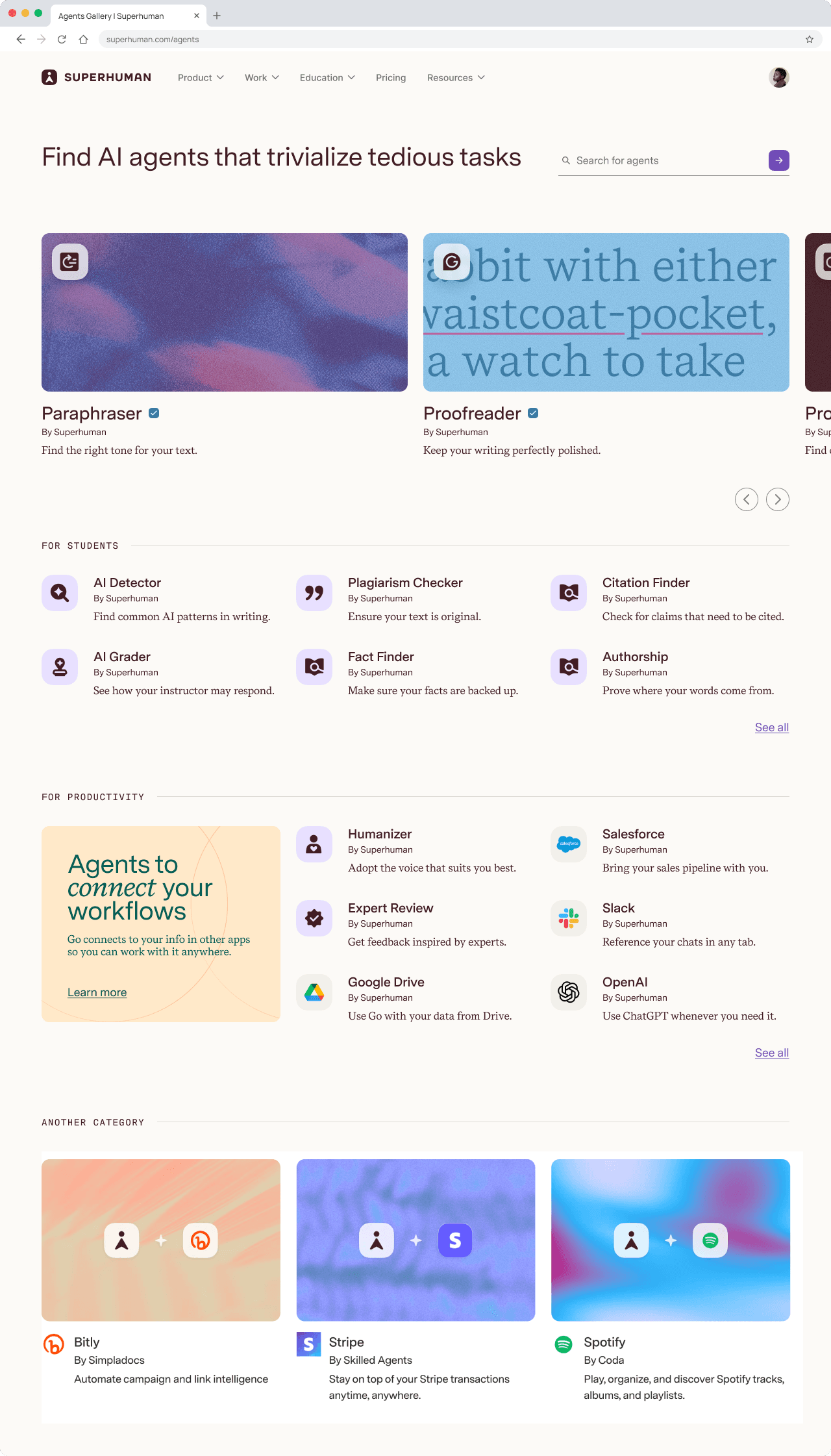
Large editorial-style cards introduce users to high-value AI agents through rich visuals and concise descriptions, encouraging exploration while highlighting flagship experiences.
2. Goal-Oriented Categories
Instead of organizing by AI capability, agents are grouped into familiar categories such as Students, Productivity, Writing, and Integrations—allowing users to browse based on the task they want to accomplish.
3. Trust-Driven Marketplace
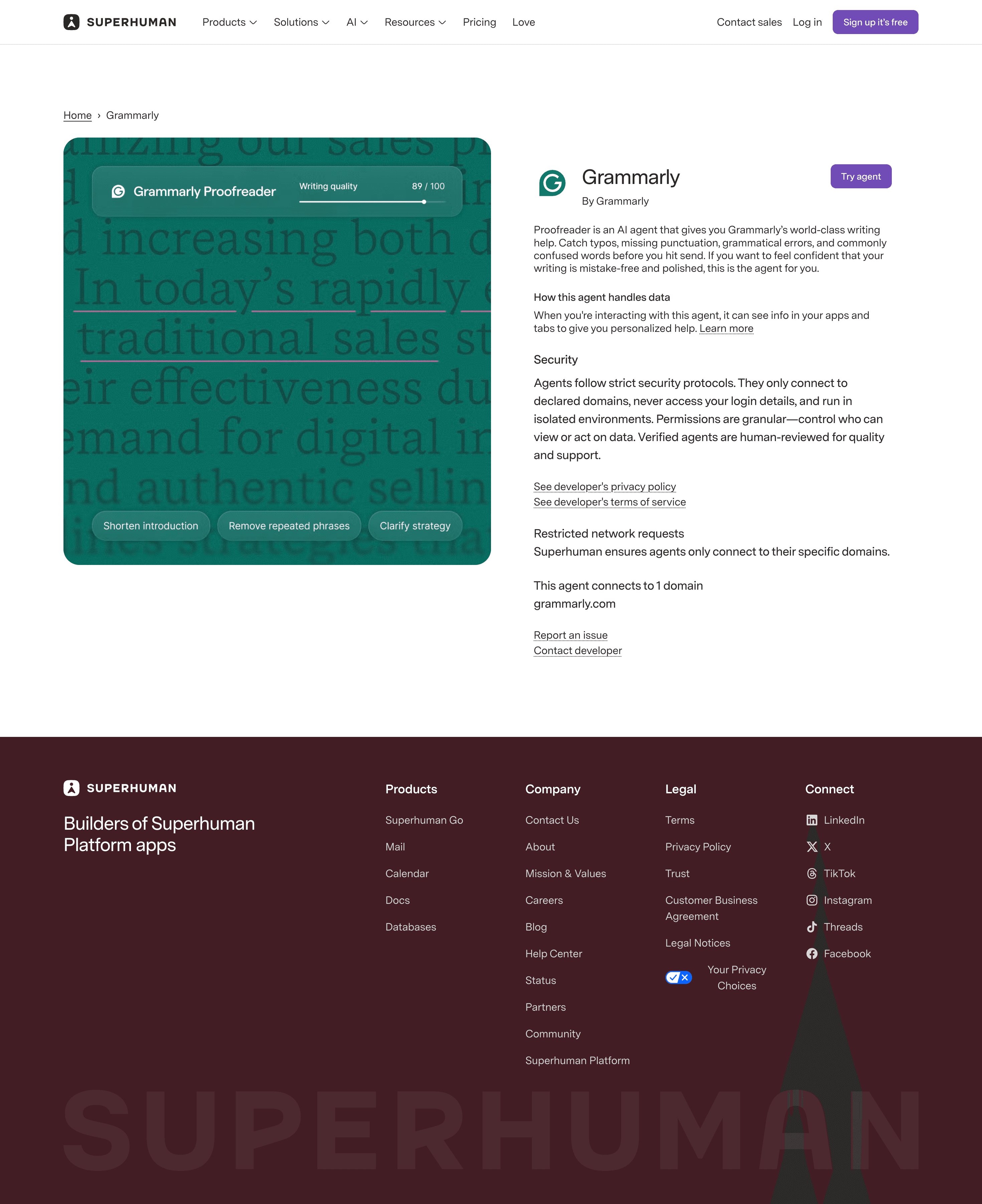
Each agent clearly communicates its creator, purpose, and value, helping users quickly determine whether it is relevant while building confidence in both native and third-party experiences.
🌓 Results
Product Impact
Increased AI agent discoverability
Improved first-time agent adoption
Reduced friction in exploring new capabilities
Established a scalable foundation for future AI agents
Created a consistent marketplace experience across categories
Platform Impact
Enabled first-party and third-party agent distribution
Supported long-term marketplace growth
Increased visibility across the AI ecosystem
Strengthened Superhuman's AI platform strategy
🌔 Lessons Learned
The project reinforced several important principles:
Tasks Over Technology: Users think about the work they need to accomplish, not the AI powering it.
Curation Matters: Highlighting a few high-value experiences is more effective than exposing every available option.
Trust Drives Adoption: Clear ownership, descriptions, and familiar brands help users feel confident trying AI.
Design for Scale: Marketplace systems should accommodate hundreds of future agents without increasing complexity.
Consistency Enables Discovery: Reusable patterns make exploration feel predictable while allowing new categories to emerge naturally.
🌕 Conclusion
The Superhuman AI Agent Store transformed a growing collection of AI capabilities into a cohesive marketplace designed around user goals. By prioritizing discoverability, trust, and scalability, the experience helped users confidently explore AI while creating a flexible foundation for an expanding ecosystem of intelligent agents. The project demonstrated how thoughtful marketplace design can make AI feel less like a collection of tools and more like a library of collaborators.